Thursday, February 9, 2012

The Land of Wind and the Land of Fire: Patagonia and Tierra del Fuego (11th -30th Jan '12)

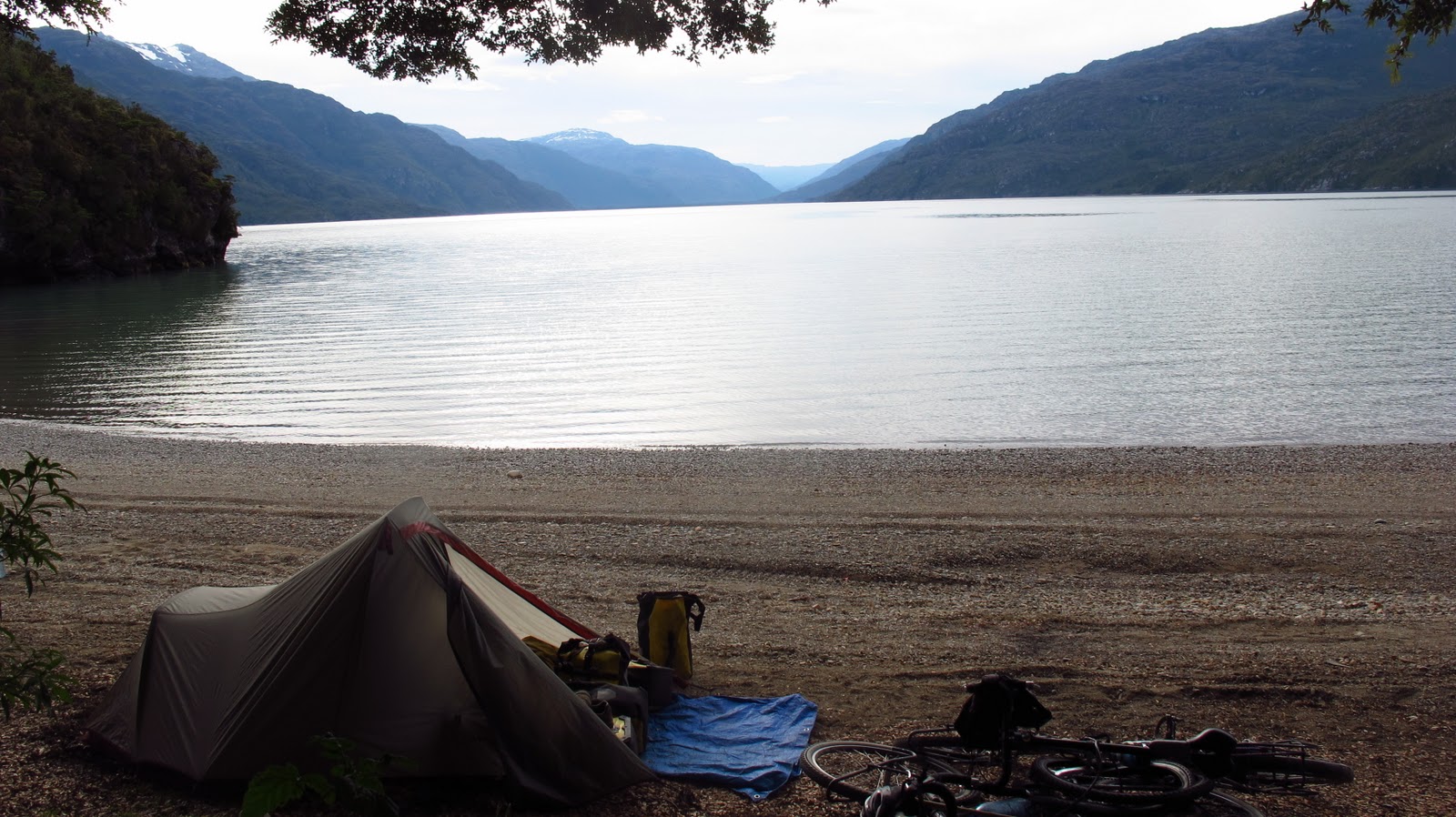
Windy. One word I think all cycle-tourists would use when asked to describe Patagonia east of the Andes. The wind pretty much started as soon as we crossed over from Chile into Argentina. The crossing itself was quite an adventure. We had to take a boat across Lago Villa O'Higgins where we joined up with a small, rough road for 15kms of riding (and a lot of pushing uphill to a pass), through the Chilean/Argentinian border. On the Argentinian side of the border there is a small horse track, which with loaded bikes is no easy feat. The track involved almost 7kms of pushing past rocks and bushes, lifting the bike over fallen trees, crossing streams and getting stuck in deep ruts. And to add to the adventure a little bit of snow and hail on the way. Once we finally got down to the small Argentinean borderpost on the shores of Lago del Desierto we then took a boat across the lake to reach a rideable (joy!) gravel road.
This crossing is famously hard in the lore of South America cycle tourists, but we actually enjoyed it as we ended up doing it the same day as some other cycle tourists, Chris and Jaco, and Andy and Anita, and it ended up being a real team-building exercise!
We helped each other with the bikes in the tough parts, in the stream crossings, or when we got ourselves into awkward positions. We gained ourselves a new cycling family, which was expanded when we reached the touristy town of El Chalten and met up with more cyclists, John and Cathy, Ping and Alex, and Bernard. The All-you-can-eat pizza place didn't know what had hit them. We spent some time hanging in El Chalten and with all the cyclists we went for what was possibly the world's slowest hike (with far more time spent chatting than walking) up to a glacier, Lake Toro and Cero Torro.
Leaving El Chalten we entered the Patagonia of my imagination – the land of endless pampas grass, wind and desolation. The wind cannot be believed until it has been experienced. When we first left El Chalten and experienced the famous Patagonian wind, it was strongly in our backs and we zoomed along at almost unimaginable cycling speeds. I tried a number of different experiments to test out the wind's force. At one point I started from deadstill and tried to see how long I could go without pedalling. I went 10km before I got bored from sitting on the bike and not doing anything and started pedalling just for the fun of it – but during the time that I hadn't been pedalling I reached 45 km/hr, and probably averaged around 35-40km/hr. Did I mention that this was Without peddling!!!
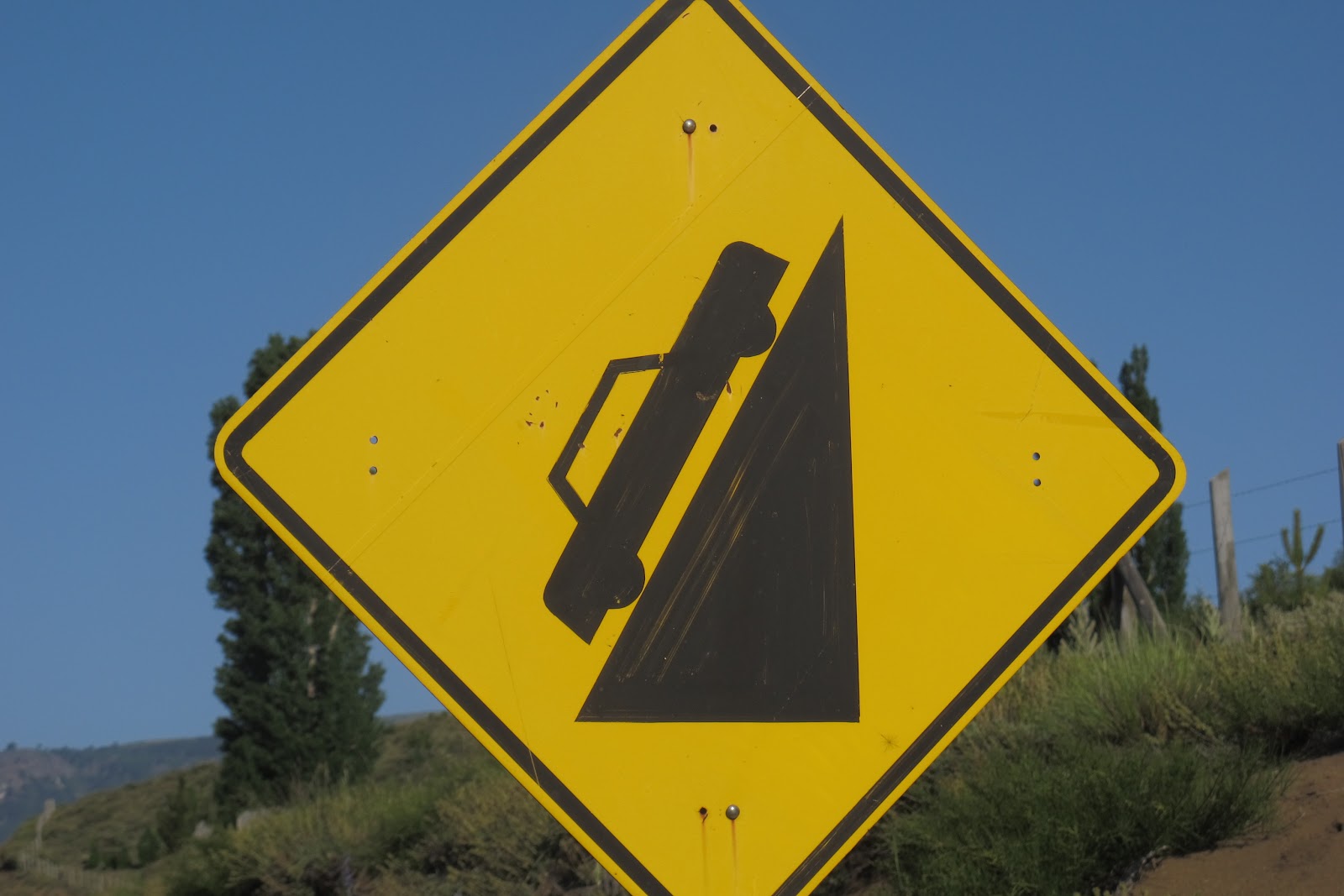
The wind is all well and good when it is in your back, and for most of our time through Patagonia the wind was kind to us. But the wind also swung around, and the road snaked, and we often ended up fighting the wind, riding with our bikes on a serious lean and (don't read this bit mum) struggling to stop being blown into the middle of the road. This was possibly the only time that I was happy that our loaded bikes are so heavy as anything lighter would have been picked up and blown away! And then there was the times that we ended up with a headwind and were slowed down to a crawl, fighting our way through a wall of wind. The wind sometimes dictated our route as well, like the time we tried to go into El Calafate but after about 100m of pushing into a galeforce we gave up and turned around. Hmm never wanted to see that big glacier anyway..
Very few people live in the area of Southern Patagonia that we cycled through. In our three-ish weeks in this area we passed through a few larger towns, such as Puerto Natales and Punta Arenas but most of the time we were passing through unpopulated steppe, with only the occasional estancia (huge farm, like a station or a ranch) or police post. There were dots on our map – which in other areas would be towns, but in these remote areas could turn out to be abandonded bus-stops, or ancient cemeteries – or in best case scenario an estancia. We enjoyed the quiet riding, and the lack of cars, though of course sometimes it meant carrying extra supplies. We decided to take the more ripio (gravel) road through Tierra del Fuego, avoiding the main road for as long as possible and this turned out to be one of our favourite sections of the trip.
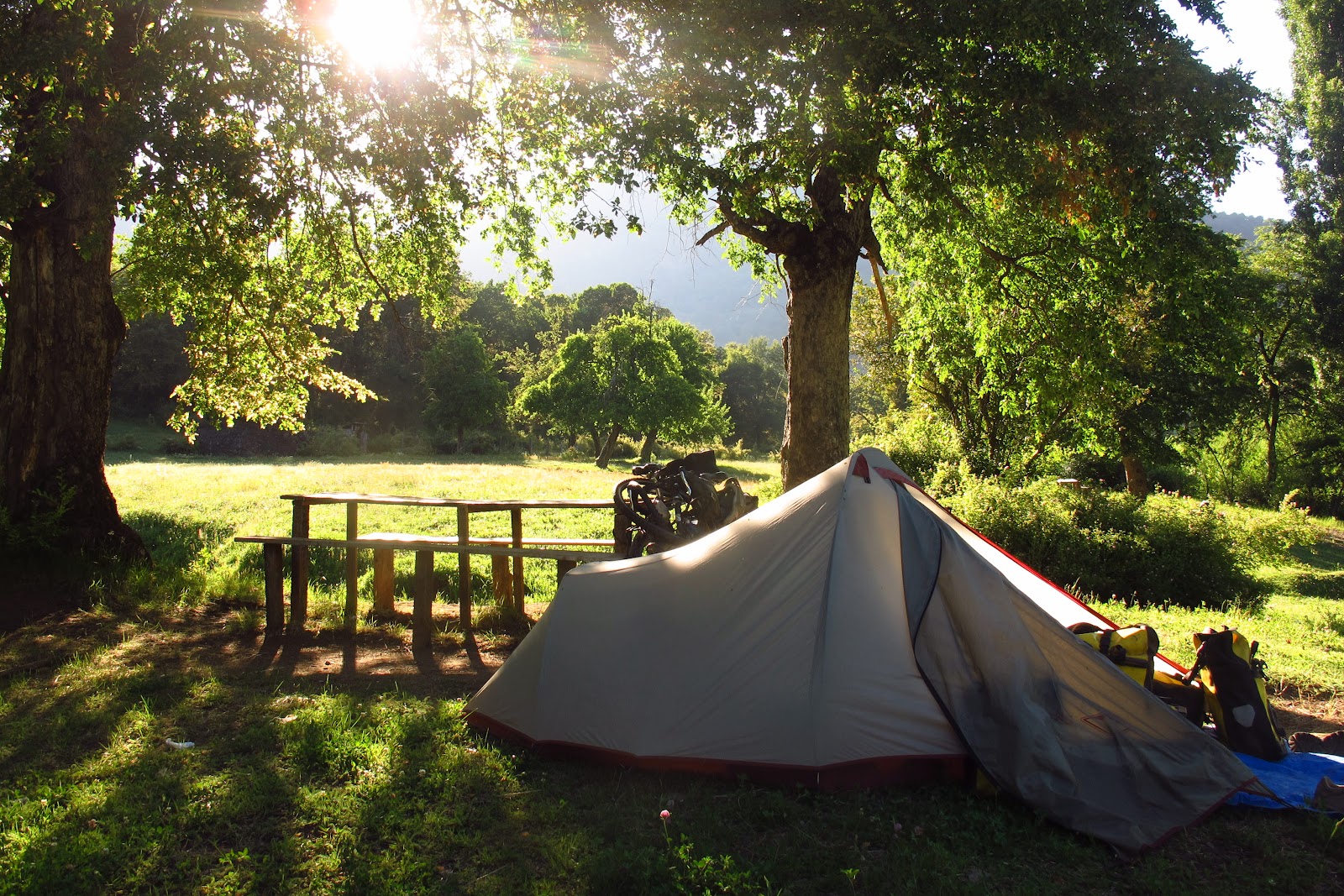
We camped at one estancia with picturesque old farm buildings surrounded by lupins -Estancia Cameron on Tierra del Fuego. We assumed it was a town, as we had read a blog about some cyclists that brought bread and beer there, but it was actually just a very large farm, which housed many worker families.. It was a great old place, well-kept and it felt like we were back in the Patagonia that we had read about. In a wonderful example of Chilean hospitality the owners of the estancia let us camp in the church yard, surrounded by old farming machinery, and brought us bread, salami, cheese, beer and the most delicious empanadas we had ever tasted – plus, some interesting stories about life out on the estancia.
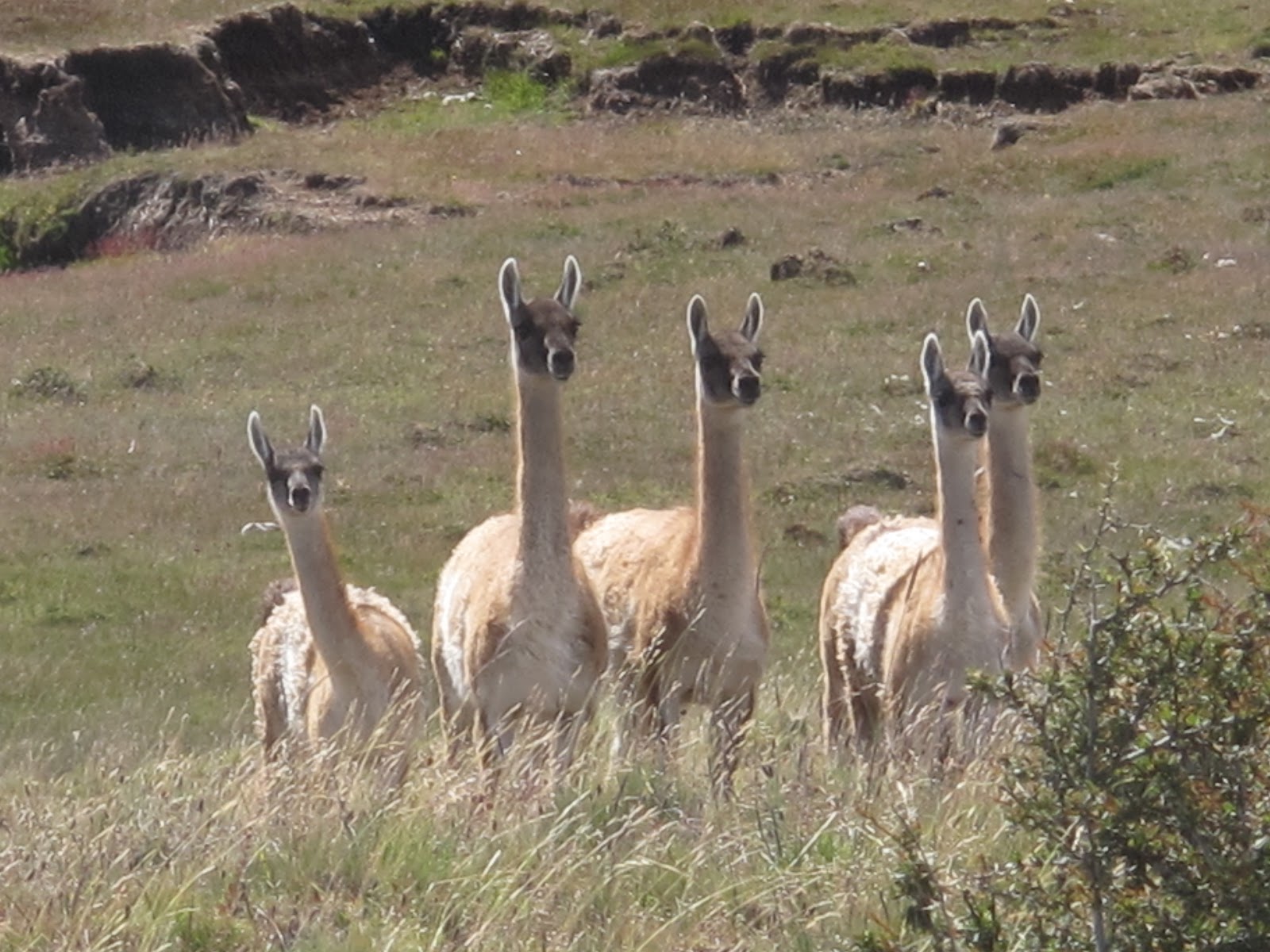
The Patagonian pampas was great for wildlife spotting. We saw lots of guanacos (in the camelid family), nandus/rheas (like an emu), foxes, condors, skunks (one at the entrance to our tent one morning – ek!), an armadillo and lots more . On Tierra del Fuego we visited a King Penguin colony, which are usually only found in Antarctica and the Southern islands, and we also spent lots of times watching the very tame guanacos, who spent a lot of time watching us right back. One was very intrigued, came very close to me and Jaco and then charged us. Someone had told us that when guanacos fight they attack each other between the legs, so as the guanaco was charging me I had Jules yelling from a safe distance “watch out for your crotch” - helpful advice from afar, thanks honey. Guanacos make the strangest noise – best approximated as a laughing alien – which sounds very creepy floating across the wide-open, empty pampas...especially when you know they are standing back there planning an attack on your nether-regions.
As we approached the bottom of Tierra del Fuego the open pampas gave way to stunted forests of Northofagus. We crossed back into Argentina at our quietest border crossing yet – it was so very small that they haven't even built a bridge over the river to connect the two countries. We had to push our bikes through shin-deep, freezing water to cross the river and enter Argentina for the last time. In Argentina we rejoined the main highway for our last couple of days to the end of road, Ushuaia and even more importantly to our real aim.. the Bakery “La Union”, about a day's ride before Ushuaia. Not only is this bakery everything you could dream up for baked goodness, it is run by a cycling enthusiast who gives cycle-tourists a shower, a feed and a bed in the bakery's warehouse (hello fantasy world). Chris and Jaco and Jules and I were in heaven. And here we met Alain, who we had first met on our second day out of Anchorage, a year and a half before!
Our last few days on the bike, as we were running out of room for cycling, I was a bit glum as I wasn't quite ready to finish up our trip. We really dragged out the last few days of cycling as long as possible by camping about 10km before Ushuaia, and then actually passing straight through Ushuaia out to the final final end of the road at Lapataia in the Tierra del Fuego National Park – where we camped and enjoyed all our “lasts” - the last time we would both eat out of the same saucepan using only spoons, the last time to pack up the bikes, the last time for second breaky etcetc.
I wasn't ready to finish up as it has been such an amazing trip, meeting so many people, seeing so many amazing places and travelling in the best way that we could imagine.. by bicycle. Though, on one of our last cycling days into Ushuaia, when we got caught in heavy rainshower, got soaked through and freezing cold – and ended up seeking refuge in a dog kennel, where all we could smell was wet dog... we did look around and admit that maybe there would be some things that we wouldn't miss about the cycle touring. But even though we were stuck in a dog kennel we were still with our good cycling friends, Chris and Jaco, we still managed to make each other laugh, we made a cup of tea, and half an hour later the weather cleared revealing fantastic views down the valley and we found a magic little free camp next to a picturesque river. Dog kennels aside we are really going to miss the cycle-touring!
This is our last cycling blog.. but stay tuned for one more as we get our head around finishing up, the packing away of the bicycles and our adventures to make it back home.


Tips for Cyclists
Be prepared for the wind!! Riding north to south is definitely easiest in this area, as the winds are predominantley westerlys in summer and the N-S route gets more of these as tailwinds.. though you will still have lots of head and side winds too.. its still not “easy”.
There is quite a bit of info the Pan-Am Riders Google Group about this section if you do a search on here you will bring up some good distances, campsites etc.  Here is the website for info on the ferries from Villa O'Higgins across Lago O'Higgins http://www.villaohiggins.com/hielosur/ After the ferry ride it is 15kms on a dirt track and about 7kms of tough work on a horse track to Lago Desierto.  Then you can camp for free near the Argintinean immigration post on the north side of Lago Desierto as you wait for the ferry to take you across.  The cost of the ferry across Lago Desierto had gone up to 110 pesos, and they tried to charge us for the bikes (20pesos) - though we managed to bargain them down a bit as we had never heard of anyone being charged for the bikes before and it was pretty expensive already.
We found that after El Chalten we had to plan our campspots a little more carefully as on the days that the wind is really strong (as it was often) then it was not possible to just wildcamp anywhere, we really needed to find shelter out of the wind. Luckily there are a few police posts, vialidads (road-machine warehouse/storage places), rivers and other areas to camp.. here are a few that we either stayed at or noted as potentials (distances heading north to south):
  •  La Leona river: 114 kms from El Chalten, there is a hotel where you can camp for US$10 per person – super expensive but if the wind was the galeforce that we had the shelter was worth every penny!!
  • There were a couple of buildings about 10 and 30kms from La Leona but not sure if they could offer shelter or not
  • 87km from La Leona Hotel (east of the turnoff to El Calafate) is “Rio Bote” which is an ambulance and roadworks station – we camped down by the river which was nice and sheltered from the wind, a good spot
  • El Cerrito: about 60-ish km from the turnoff to El Calafate, at the intersection of the cut-off road to Tapi Ake: is a vialidad and buildings, and supposedly the man is very nice and will provide you with shelter (we didn't stay there)
  • Rio ?Tero: 20kms from El Cerrito on the ripio road to Tapi Aki - it is a police station and the officer's house on a small river.  We met him on the road and he told us to camp at his house, out of the wind, even though he wasn't at home that night.
  • Tapi Ake: About 45kms from Rio Tero where the cut-off road joined back up the main highway - another police post and a VERY small store (that wasn't open when we passed through but we think it had hardly any food), the policeman was very nice and said that cyclists can camp in their yard.
  • Cancha Carrera border:  The Chilean border guards were very nice and would probably let you stay there (tho' we went on to Cerro Castillo)
  • In Cerro Castillo we camped in the children's park in town, great campsite – a grassy spot for the tent, great big wall for a wind shelter, picnic tables (if a little minature) and toilets half a block down the street. We asked the police for permission first but everyone in town was fine with us camping there.
  • Morro Chico: 100km from Puerto Natales - a police post where they will let you either camp in a shed over the road or in a building out the back if the weather is very bad
  • Gobernador Phillipi: about 100km from Morro Chico - an intersection with a few houses and a service station.  They let us camp in an empty donga (transportable building) that was small and dirty but out of the wind.  The servo also sold the Best Hot Chocolates!
Ferry from Punta Arenas to Porvenir details at: http://www.tabsa.cl/Html/Porvenir.php 
From Porvenir the road is ripio, but in pretty good condition and we really enjoyed this section. After about 100kms we went an alternative route, instead of continuing on to the border crossing at San Sebastian we turned off at the intersection that was about 100km east of Porvenir and followed the ripio. We ended up taking 7 days from Punta Arenas to Ushuaia, so this way is a little longer, on more ripio and a lot more remote but we really enjoyed it – hardly any cars, and you don't have to spend so long on the main highway.  The ripio is in fairly good condition for almost the whole of the Chilean side. However, once you turn off the main road to go the ~13km to the border Paso Bella Vista, then the road gets a little rougher and then on the Argentinean side of the border the road is a lot worst. Some sections with lots of corrugations/washboard and loose ripio. 
Our camping spots on this section: On the road out of Porvenir there were a few potential spots within the first 30kms but we continued on to 80 kms out of Porvenir where there is a stand of trees that offered limited protection from the wind. The next day we camped at Estancia Cameron (a few kms off the road). Then at about 40kms past Cameron we started getting into some patches of forest which offered good protection from the wind and potential campsites. The night after Cameron we camped at the borderpost (Paso Bella Vista), and the following at an Estancia starting with V off the main highway (about 70kms before Tolhuin) – where they very kindly put us up in one of the old houses. Then the next day at the bakery (joy!).
If you go this way (or even if you go through San Sebastian but want to take a detour then you can go and visit the newly established King Penguin colony about 14km south of the intersection that is 100km east of Porvenir.  We had read about in some blogs from the year before, where it was possible to visit the penguins by jumping over a fence.  However, by the time we got there the area had been made into a private park and was VERY expensive to get in to . $25 per person.  But the family running it were very sweet and seemed to be doing a good job of protecting the colony (they said that they had had problems with impacts on the penguins due to the increase of visitors which is why they established the park), they very kindly let us in at a reduced price as we had to scrounge together money to pay.
Just before Ushuaia: If like us you are trying to drag out the end of your trip, then about 10kms before Ushuaia there are some good campspots on the river. We went down a small track at about 100m before the 3045 km marker and found a sheltered spot.
We cycled the last 25-ish kms out of Ushuaia to the end of the road in the Tierra del Fuego National Park, which is a cool little park, and with a great free campsite (although it costs 85 pesos to get into the park you can camp for two nights in the very pretty Laguna Verde campsite).
In Ushuaia we stayed at the campsite (La Pista del Andino) which is about 3km up and out of town. Super-friendly and helpful people running the campground, and in a nice, quiet, wooded location.  They let us sleep upstairs in the cafe the night before we flew out so we didn't have to pack the tent up wet, and provided a taxi-service to the airport with our bikes. Very friendly.

Wednesday, January 18, 2012

The Sublime Carretera Austral: Chaiten to Villa O'Higgins (23rd Dec '11 - 10th Jan '12)

The Carretera Austral is a 1200km+ stretch of mostly gravel road that runs through northwest Chilean Patagonia, past fiords, forest, glaciers, lakes and mountains. The road was only opened in 1988, and before then the area was primarily connected by sea access and small tracks. So it is a pretty special place, large parts of which still remain untouched. We had had an interesting introduction to the Carretera Austral further north in Chile when we met a Chilean who had worked on the (tough, dangerous, long drawn-out) construction of the road, and who got out his personal photo albums to give us a history lesson.
We had originally planned to meet back up with a bunch of cycling friends in Santiago for Christmas, but unfortunately the ferry that we had planned to take to connect up with the Carretera Austral broke down (the road is still not connected to Chile by land, only through ferry connections, or coming through Argentina in the east). We didn't have so much time left to complete our trip as we have a deadline to get home for a friends wedding... and Patagonia was calling. So, with sadness, we missed the cyclists party and instead caught a ferry from Puerto Montt to Chaiten and the start of the Carretera Austral. While we were sad not to be able to see our friends we were pretty excited about heading into Patagonia, an area that we have been dreaming of cycling for a very long time.
The Carretera Austral area is pretty wild, with often wild weather extremes - we had heard stories of cyclists battling the wind, rain, storms, etc, and we prepared ourselves for nasty weather, and in particular the rain that this area is famed for. This of course meant that we had perfect weather, with blue skies our whole time on the Carretera! Instead of the problem of having to find shelter to camp in and ways to dry all our wet gear, we ended up having the problem of warm days and not enough sun-cream to get us through!
One of Jules' little superstitions (she has many) meant that we couldn't buy new sunscreen while the sun was shining as if we did it was sure to make it rain. So we had to start rationing our sunscreen as we peddled for more than two weeks under the most extraordinarily good weather! We were starting to think it never rained in this area, until on our last day on the Carretera into Villa O'Higgins, where the road ends, we had about an hour of drizzle – not too bad at all! Though the next day, which was a rest day for us as we waited for the boat to take us across Lago Villa O'Higgins, the weather gods decided to show us what we had avoided so far during our time on the Carretera. It was miserable and wet all day - ahha that was more like what we were expecting! God-forbid that our tent should get wet, so we got a hostal to get all cozy and listen to the rain on the roof.
When we started off on the Carretera Austral it reminded us a lot of our first experiences cycling in Alaska. Arriving on the ferry in Chaiten, into a green land of mountains and forest and wilderness reminded us of when we first arrived into Anchorage on the ferry. The main difference on starting the Carretera was that Jules didn't spend the entire time being terrified of bears and envisaging us being torn alive by a grizzly. Thankfully in Patagonia there are less wild animals to be scared of. However, in Patagonia because of all the warning signs and information on the dangers of the Hanta Virus (a virus spread by mice faeces and urine) Jules is now terrified of mice wee. And instead of always asking me if there might be any bears around, in Patagonia she is always asking if there is a chance that a mouse might have wee-ed in our camping spot.
We had days of sublime riding, past scenery as beautiful as I have ever seen. Wild rivers and lakes, forest, snow-capped volcanoes, glaciers. Every day was a scene from a tourism brochure. And we could wonder through this land, finding fantastic free camps and lakes and rivers to “fish” in.
I use the word “fish” loosely as our apparatus consisted of a handline and a fishing pole macgyvered up by Jules from some bamboo she had found on the side of the road. We did look quite ridiculous and when we met Christian (a very helpful Swiss cyclist) he told us that with the hooks we were using we were likely to “catch a whale”. So with a little help from him we rejigged our lines. We still weren't very serious fishers though and only had gone “fishing” a couple of times as an excuse to chill out next to a beautiful river or lake. Jules would throw her line in a few times, then get bored and declare that there were no fish in the river. So it gave us the shock of our life when we actually caught a fish. We had stopped for lunch at a lake and Jules decided to throw the line in a few times (as an excuse to get out of making lunch I think). She suddenly squealed and said in a high-pitched voice “There's a fish on my line”, she then promptly tripped over and landed in the water. However, somehow in all the confusion she still managed to land the fish, which was very decent-sized and which tasted amazing cooked up on our camp stove that night!
In the northern stretches of the Carretera Austral we passed through lush forests and past snow-capped volcanoes. We had Christmas by the picturesque Yelcho Lake and camped in the very pretty Queulat Nature Reserve where we hiked up to the hanging glacier. The north was very impressive and wild, but we were even more stunned by the area south of Cohaique, where the Carretera went through the Cerro Castillo nature reserve with its rocky mountains and the granite needles rising up to create a fortress-looking rock feature overlooking the road. We spent New Years in this park – we had thought we would be wild camping and I had bought chocolate with almonds in it to celebrate New Years (woohhoo- really living it up) but we ended up stumbling on an offical campsite in the national park where we stayed and saw in 2012 with new friends, wine and an interesting Chilean-German-Swiss-Australian celebration.
Around every turn of the Carretera the scenery just appeared to get more stunning. Following Cerro Castillo we passed through an area with amazing coloured rivers and lakes – Lago General Carrera, Lago Bertrand and the River Baker. We cycled through lush Gondwanian forest of Northofagus (Southern Beech) dripping in lichens, roads lined with the giant-leaved Nalcas and the colourful Fuschias and we had views of waterfalls falling from ice-fields and glaciers to form streams and rivers, so sublimely unpolluted.
In the southern section of the Carretera there were more moorlands, with swampy lands and stunted vegetation. We visited the interesting little town of Tortel which had no roads to it until 2003 and where the whole town is built around a collection of boardwalks. After Tortel we caught the ferry which connects the last little scrap of Carretera - the road from Puerto Yungay, which was only opened in 2000, connects to the end of the Carretera Austral at Villa O'Higgins. From here, as cyclists, it is possible to catch a ferry, cycle/push your bike up 21kms of 4wd tracks and horse trails, catch another ferry and arrive into Argentina. Which is the next adventure in store for us...
The Carretera Austral was one of the highlights of our trip so far, it is such a magical place, with so much beauty – and we were so lucky with the weather that accompanied us! We were also very happy to be able to see this area as it is now, as there are controversial plans to dam a number of the rivers for hydroelectric power. It is a big topic of discussion in the area at the moment - check out “Patagonia Sin Represas” for more information.
And last but not least... The Carretera Austral was fabulous for meeting lots of other cycle tourists!  There are many people cycling this route, and Jules and I were pretty excited about meeting other cyclists for the first time in a very long time.  Unfortunately, sometimes the other cyclists weren't as excited about meeting us!  Our first few days meeting other people we would get overly excited and jump up and down while exchanging the general cycling pleasantries.  We couldn't work out why they weren't as excited as us - until we also started meeting so many other cyclists, and realised there were lots out there!  But we made some great friends, and had some great laughs, and met a couple of super-nice people heading north to Alaska - which made us so excited to think of their amazing trip they have ahead of us.. I tried to convince Jules to turn around and head north back to Alaska, but she wasn't convinced.  So for now we continue south, about to cross into Argentina, and the Patagonian pampas of legend!


Saturday, December 31, 2011

The Joy of Cycling - the Lakes District of Chile: Chillan - Puerto Montt (7th - 22nd Dec '11)

I start this blogpost with a little homage to the Wine of Chile.
It is great and cheap and comes in handy boxes.
Now I know drinking wine in a box is very uncouth but Jules and I have to admit that we have been drinking copious wine from cardboard here. It is much easier to carry on the bike and it tastes really good! Though we are not sure if it is just that the Chilean wine is that good, or that our standards have been reduced by our time on the road. Either way, we have gotten quite used to our evening tipple at some beautiful campsite overlooking a lake or river.
Now if that is not enough reason to entice you to come cycling in Chile (and it should be), then images of the Lakes District of central Chile will have to do.

We spent a few weeks travelling south through this area (encompassing the Araucania and Lakes/Rivers Districts), under perfect blue skies, with cycle-friendly temperatures, staying at amazing campspots, with fantastic views of mountains, snow-capped volcanoes and picture-perfect lakes. And meeting super-friendly people. In this section there are lots of small roads to explore, national parks to meander through and enough little towns to buy the essentials... like handily boxed wine.
Jules and I wandered on a kind of random path through the lakes area – we were originally going to cross into Argentina and head through the lakes district on that side of the Andes but we had heard reports that the ash from the volcanic explosion was still causing problems and we wanted to spend more time in one area rather than just whizzing through. Besides, to be honest, we were having far too much fun in Chile to leave.
We had thought up a sort of general route through the back roads of the Chilean Araucanian and Lakes district, but this changed every day, and sometimes even hourly if a local happened to recommend a potential route to us. Our wanderings through the lakes district took us to hotsprings, past a number of volcanoes, up through forests of the unusual Monkey Puzzle trees, over lava fields, alongside numerous lakes and to old German settlements.
One of our most enjoyable sections was the River Biobio valley. Generally its a bad idea if the area you are heading into does not have any roads leading out of it, but this didn't stop us deciding to explore the River BioBio. We had read about a cyclist that had passed this way and then used a horse-trail to connect to roads further south and we decided that it sounded suitably foolish enough for us to attempt. When we reached the end of the valley, and with a bit of local advice, we found a foot trail down to the river, then a narrow pedestrian bridge over the river,and a very steep and rocky horse track up from the bridge that we had to two-man push our bikes up in stages. The horse-trail then widened slightly and we could ride sections of it but overall the next 7kms involved a lot of pushing - up to the top of a little pass. We then crossed down into another river valley where we found a 4wd track and eventually connected up with a gravel road. Not our easist of routes but definitely one of our favourites. We had found ourselves in an area with no road connections, only forests and farms and views of the surrounding snow-capped volcanoes, lakes and creeks.
Our progress through the lakes area was mainly influenced by the fantastic campspots that we found. Almost every night we were camped either beside a picturesque river or a lake and we often gave up on a day`s planned ride when an opportunity to contemplate life beside a river presented itself. Usually we asked the locals where we could camp and they would point us in the direction of some great spots. Lots of the little towns had either a farmers field or a spot next to the river where the locals camped, and sometimes people would open up their gate for us and direct us to a fantastic river/lake frontage, often complete with a picnic table!
Now I know this blogpost has been a little bit gushy and crammed full of superlatives, but I just can`t help myself. Jules and I floated through the lakes district on a little cloud of cycling (and wine) happiness.  We luxuriated in fields of daisies, in the hues of roadside lupins, and the beauty of the climbing wildroses alongside the road. It would have been too good to be true, except these gasp-worthy scenes of Spring flowering also helped induce terrible attacks of allergies. So I was riding past stunning vistas with a continually running nose, itchy red skin, and swollen puffy eyes. Just to bring me back down to earth.
The sublime weather came to an end as we arrived in the southern reaches of the lakes district, and we received a healthy dose of rain. Our first spot of bad weather for a very very long time...and a good chance to hide up in the touristy town of Puerto Varas to work out the next part of our trip – heading south into Patagonia.


Notes for cyclists.
Some people are under the impression that you have to stick to the main highway in Chile, but it is quite possible to travel all the way through this section using smaller roads and backroads. It involves a lot of zigzagging, but it is worth it to avoid the Panam and enjoy the countryside. Just get a good map and connect up the roads!
We left the Panam at Chillan and headed south through Pemuco, Yungay and Quilleco – this is all on asphalt. There is a great municipal campsite at Yungay – just before you get into town as you head over a bridge. It is on the east side of the road, right next to the river. Very pretty camping spot with picnic tables– no-one there when we were there (except the family that caretake it). And free!
Then there is a ripio road through plantations from Quilleco in the direction of Santa Barbara.  At one point on this road you will get to a junction, next to a river.  East leads to Villucura and west to an asphalt road, you can go either direction and get to Santa Barbara.  We went against the locals advice and went east but after only a couple of kms we turned off on a small road leading to "Corovaca" (or something similar starting with a C!).  We didn't know whether it connected through but it went up through some plantations on some steep rough roads, nice riding,  and eventually we managed to connect through to Santa Barbara.

From Santa Barbara we headed east through the River Biobio valley, which is asphalt until Ralco and then it becomes ripio (and there are some nice steep climbs in this area).  Good wild camping opportunities along this section to Leroy Ralco, but if like us you are tempted by thermal springs at the end of a hard day's riding, you can camp at the "Termas del Avellano".. 3500 for the Springs and camping.
The tourist office in Ralco told us there was a new bridge across the river that would connect up to roads further south but none of the other locals knew about this! When we arrived in Leroy Ralco, towards the end of the lake,  we asked around and got pointed in the direction of a pedestrian bridge over the river. We had to push the bikes down a foot path to the bridge, then 2-man push the bikes back up on the other side (steep rocky trail!) for a few hundred metres (it felt like forever) to connect up with a slightly wider horse trail. This trail is partly rideable but most of it was too steep and rocky for us to ride and we ended up pushing most of the 7km up and over the pass. Ask the locals in Leroy Ralco about the trails, they are over private land so we asked permission from a couple of people (hopefully the right ones) as well. At one point the trail forks into two – the right hand starts going up more steeply and this is the fork you want. The left fork goes towards some poplars,and a farmhouse (really nice family, I asked them if we could pass through their farm and they showed me the right way). Once over the pass the trail gets a little wider and eventually becomes more of a 4wd track, and then eventually turns into a gravel road (through a gate) and finally you join up with an actual road that was marked on our map. We went left towardsTroyo (friendly town, with a great farmer's field to camp in next to the river).  It was about 21kms from the top of the pass to Troyo, the first section all down but most up and down along the river.
We then headed towards Lonquimay, then Liucura (pretty and easy riding) and then back to Curacautin (where we had to get something fixed on the bike).  After Curacautin we went up through the Conguillo National Park, which was a great ride!. The first 10kms from Conguillo was asphalt and then it turns to ripio, and the ripio gets rougher the closer to you get to the park. It is 4000 pesos to enter the park, and it is a really pretty ride up through the Monkey Puzzle trees, nice lake – the road includes ripio, sand, washboard.. it has it all!  The camping in the park is really expensive but the park rangers told us to camp at the southern entrance station, which was a good little spot, we spent al day in the park and then headed out at the end of the day.
Asphalt, quick riding Melipeuco to Cunco. Then we turned onto the “Interlagos” Route – where we got a little lost and when a long way but ended up on a hilly ripio ride over to Villarrica. Villarrica was the most touristy area that we went through.
We then connected south past Lican Ray and Panguipuilli.  Then we headed towards Los Lagos which was a pretty quiet road. We were on the Panam for about half a day, then went along the road to Lago llanquihue.  We really enjoyed the section after La Cascada which goes through the national park at the base of Volcan Osorno. Then nice, easy (but still hilly – no flat riding along lakes in the Lakes District!) along the other lake shore into Puerto Varas.


** Great bicycle shop in Puerto Montt - Oxford Bikes, very helpful staff

Friday, December 16, 2011

Desert, beaches, wind (it's just like home!) Northern and Central Chile: San Pedro – Chillan (14th Nov - 6th Dec '11)

When we first arrived in Chile we spent a few days resting up in the adobe-walled, tourist hotspot of San Pedro de Atacama. However, after a pancake-eating orgy it was time to board the bikes and head south and west, through the Atamaca Desert. Chile is a very long country, more than 5000km long, and in its northern reaches is the Atacama desert, the driest desert in the world. Supposedly this desert is so dry and devoid of life that NASA come out here to check their life-finding technology. We could certainly see why as we rode through landscapes of empty sand with no signs of life at all. This bleak landscape was accompanied by strong winds and lots of mining traffic. Urgh.
Thankfully after a couple of days spent looking at sand we could turn-off the Panam highway a little way after La Negra and take a nice quiet backroad towards the coast at Papusa. This involved a bit of a climb over the coastal mountain range and it was still through the desert, but at least it had some changes in topography to give us something to look at other than sand. We rode with Karin and Martin again through this section and we shared some lovely desert campspots and some good laughs.
We had a great ride down from the desert towards the beach at Papusa, where we dropped out of the mountains and down to the vegetated coast. It was wonderful to see some plants again, to enjoy the colours and to have smells to smell.
After the desert the coast was sensory overload. We moseyed along the coastline for a couple of days, enjoying the sights, before we had to head back to the desert. Along the way we had great beach campsites, fresh fish caught by the local fisherman and cooked up by Karin, friendly fishing villages and the joy of seafood empanadas. We cleverly managed to time Jules birthday to coincide with a couple of days spent next to the beach in the great little town of Taltal - luckily for me as otherwise it would have been her second birthday in a row in a desert! Birthday celebrations included sunset beers, yummy seafood meals, and good company with Karin and Martin.
When we left Taltal and headed south, back on the Panam, we were back to the dry desert. However, as we headed south we slowly started to see the changes in the make-up of the desert, and it became more and more vegetated the further south we went. This area is known as the “Flowering Desert” as occasionally after a big year of winter rainfall the desert is transformed into a carpet of flowers. We were lucky enough to hit one of these years and it was pretty to see. The road also passed close to the coast in some sections so we had some more beach camping time, but we decided not to spend too much in this section as we were keen to get to the southern reaches of Chile. So besides a trip into the Pan de Azucar National Park, and some rest time in the colonial town of La Serena we pretty much beelined for Valparaiso.
Valparaiso is a great little city. It is the old port of Chile, with lots of history, fantastic street graffiti and ridiculously steep hills. Known as the San Fran of Chile, it is a muddle of steep hills and stairs up and down the Cerros, houses perched seemingly on top of one another, and little nooks and crannies to explore. Valpo is also dirty and chaotic and we fitted right in. It was one of my favourite cities that I have been to, though trying to get the bikes up and down the hills was less enjoyable!
After finally finding our way out of the steep jumbled streets of Valparaiso we headed south along quiet country roads through forests and past little settlements – very different from our riding in the tree-less, people-less Northern Chile. We went first along the coast and then inland through the farming and wine areas, which meant lots of fruits stands that we could gorge out on yummy fresh and cheap fruit along the way. Cherries and stonefruit are cheap in Chile and we proceeded to stuff our faces with as many as we could carry.
We were very happy to get to the cheap fruit and veggie area because when we first arrived from Bolivia, the cost of things in Chile was definitely a shock to the system. Where we first came into Chile in the north of the country the prices were ludicrously high because of the remoteness of the area, and the effect of mining on the prices. As we headed south things got a little cheaper, though it was still more expensive than the rest of South America.
Chile was also a culture shock as it is very developed and it was like being back in Canada or the US with big roads, mega-supermarkets and well-organised cities and town. Suffering culture-shock, I had a little anxiety attack in one of our first mega-supermarkets- it was so big, there were lots of people around and there was way to much choice in the biscuit aisle for me to deal with. Thankfully we could ease our way back into the developed world by arriving in the north of Chile where it is still fairly remote and underdeveloped. In the north there were still shacks made of clapboards and tin, people still herded goats and no-one looked at us too strangely when we asked to pitch our tent in random spots.
The further south we got the more developed areas became. I almost fell off my bike the first time that we rounded a quiet desert corner and came across a major condominium development on the beach. However, by the time we got down to the mega-resorts of Vina del Mar we were getting used to the glitz, though we looked completely out of place with our dirty, ripped clothes.
The other thing that makes Chile standout from the last few countries that we have travelled through is the attitude of the dogs. In Peru and Bolivia the dogs hate cyclists and appear to want to bite our legs off. They chase us with rage in the eyes and froth in their mouth. However, in Chile our major problem has been trying to stop dogs loving us and following us adoringly down the road. A number of times dogs followed us out of a town and into the desert,happily running alongside our bicycles. We did everything we could to make them stop or turn back but not long after they would reappear, showering us with love and completely oblivious to our attempts to send them home. In one desert camp-spot a dog stood guard over our tent all night and then tried to come with us the next morning.
Even when we walked around the streets of Valparaiso a dog adopted us and followed us everywhere, including into shops, and if he wasn't allowed inside he would wait patiently outside for us. It got a bit ridiculous, with us trying to run away from him and then him happily finding us “hey you guys, where you been?”. I'm not sure where our dog magnetism has appeared from, maybe its because we smell so much? But every time we have to lose one of our adoring followers it breaks my heart.


The friendly nature of the dogs here is only surpassed by the Chileans themselves. The big-heartedness of the locals meant that we actually enjoyed, to some extent, the riding on the main highway in the north of the country (after Taltal). Normally we avoid the busy highways if we can but in Northern Chile everybody that passed us was so friendly and gave us lots of waves and toots and big thumbs up. One night camped in a roadside stop we got talking to a very enthusiastic trucker who invited us to his birthday party, and then the next few days any of the trucks that passed us from the same company gave us big cheers and encouragement - our friend must have told all his mates about us.
One night in the desert we camped next to the house of a lovely old lady who lived by herself, and talked to her animals. We won her over with some chocolate and when we went to bed in our tent she came over to tuck us in with an extra coat, some blankets to put over our bags, a bit of twine she used to tie our tent down and a safety pin to put in the tent door. It was all a little random but very sweet!
Not far out of Santa Cruz we met the most big-hearted family yet. Alejandra and her mum and dad ran a little grocery store and gave us permission to camp on the open ground next door; however, this somehow turned into inviting us into their home, feeding us and providing us with a hot shower and a bed for the night. A really awesome family and so generous to us.
Unfortunately my Spanish has been letting me down in Chile. I really want to converse properly with all the wonderful Chileans we have met, but I actually feel like my Spanish has gotten worse! I find the Chilean Spanish very different from what I am used to, and most of it is very fast with lots of slang and different words. Thankfully some people slow it down for me and speak to me like I am a child and with lots of hand signals, and in this way we get by.
We finished up the Northern and Central section of Chile with a quick couple of days riding on the Panamerican Highway, zooming along south in order to get down to the Lakes Area. There are lots more beautiful places to explore in this very varied country! Next stop: volcanoes, lakes, mountains and even more good Chilean wine.


Tips for Cyclists.
We didn't enjoy the couple of days riding from San Pedro, through Calama and down to La Negra very much. It is remote but surprisingly there is a lot of traffic (mainly mining traffic) and often there is no shoulder and lots of wind. The section around La Negra is particularly painful – we tried working out if there was a road south from Antofogasto along the coast that we could take but the locals weren't sure so we ended up riding south of La Negra on the main road (missing Antofogasto completely)and then turning off an taking the paved road towards Papusa (130-ish kms to Papusa) and then Taltal. Papusa was a friendly little fishing village where we could camp down near the ocean. We would definitely recommend this alternative route south – though you do have to cross over the coastal mountains to get down to Papusa, and then you have to climb up again when you leave Taltal (though the climb is gentle here).
We also took the road through Pan de Azucar which we really enjoyed too – hard packed dirt road and hardly any cars.
The road from Caldera to Vallenar is a new u-beaut freeway, with a great big shoulder. But this means a fence all along the side which makes stealth camping a little more difficult. A couple of times along the number 5 (about 30kms south of Copiapo and just before Huentelauquen (north of Los Vilos)) we camped in the roadside rest areas that have showers, toilets and an ambulance station that is attended all night – the ambos gave us permission to camp there, they were really friendly, though it can be very noisy with the trucks coming and going all night.
We turned off the number 5 just before La Ligua and went on the road along the coast through lots of fancy little towns towards Valparaiso. Lots of hills, but we enjoyed it.
From Valparaiso south we headed through the little back country roads as much as possible. We took the highway 68 out of town (we tried heading out of town on the smaller roads up over the hills but got turned back by someone that told us it was very dangerous and people were very bad in this area!) but turned off the highway as soon as possible and headed towards Tunquen (where we camped in a sandune) and then along the coast south (lots of steep hills here!). After San Antonio we headed back inland through small country roads (La Ruta de la Fruta) in the general direction of Santa Cruz. We got back on the Panam at Teno to do a day and a half of fast riding down to near Chillan.
Wild camping is easy in the north of Chile, where there are no fences and no people! The hardest thing is finding shelter from the wind. When we left San Pedro we planned to camp before Calama but found No shelter from the wind and so had to go into Calama and camp in town. We camped at service stations a couple of times along the Panam, but they can be noisy at night. Good beach camping when you are along the coast.